
Why Every Business Needs a Website: Top 10 Reasons
Every business needs a website because it is the one place online that you own and control. It lets customers find you, check that you are real, see your work and prices, and contact you at any hour. Social media pages and directory listings are useful, but other companies control them. They can change their rules or limit your reach at any time. Your website is different, because you control it.
Picture a homeowner in Irvine who wants to remodel a kitchen. They search “kitchen remodeling contractor near me,” open three results, and look for photos of finished projects, reviews, and a way to ask for a quote. A remodeler with no website, or with a thin listing and a few phone photos, gives that homeowner very little to go on. The homeowner moves to the next result.
Picture a homeowner in Irvine who wants to remodel a kitchen. They search “kitchen remodeling contractor near me,” open three results, and look for photos of finished projects, reviews, and a way to ask for a quote. A remodeler with no website, or with a thin listing and a few phone photos, gives that homeowner very little to go on. The homeowner moves to the next result.
A general contractor in Huntington Beach hoping to win a room addition gets compared against other contractors, and the one with project photos and a clear quote form gets the call. Even a wedding photographer in Newport Beach or a boutique in Laguna Beach is judged by what a customer finds in the first minute.
That is the core reason why every business needs a website. People check you out online before they call, visit, or buy. Your website is where that check happens, and you decide what they see.
This guide covers the top 10 reasons, examples from different industries, common objections, and what a small business website should include. The examples are written with Orange County owners in mind, but the points apply anywhere in the USA.
Top 10 reasons why every business needs a website
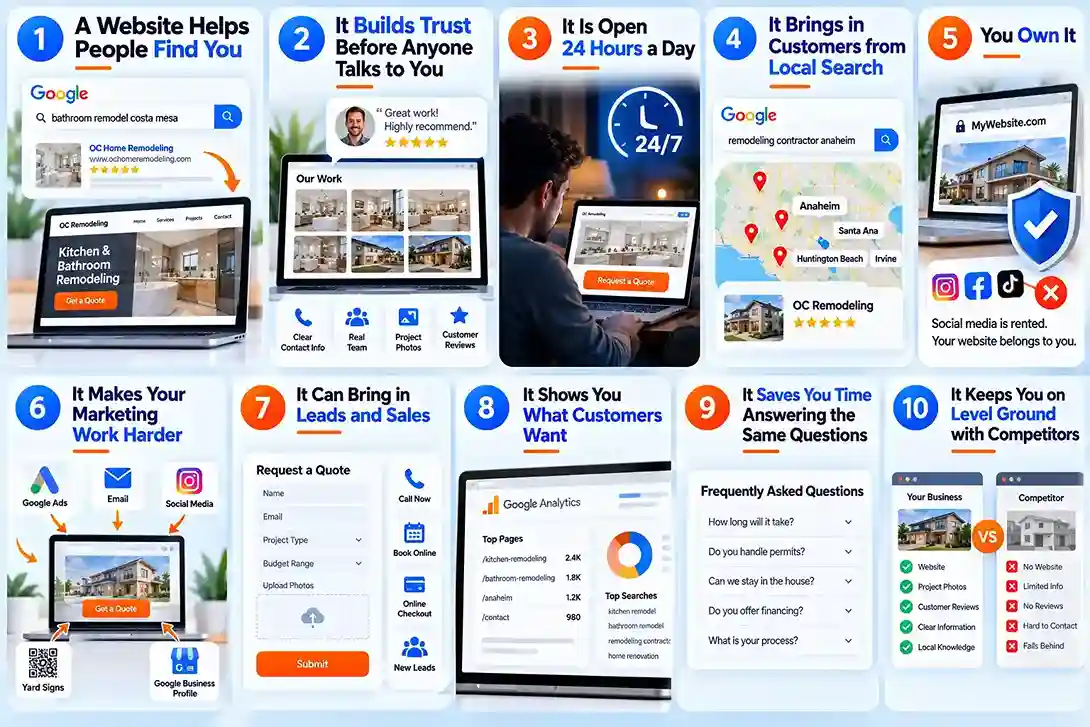
1. A website helps people find you
Most buying decisions start with a search. Someone types “bathroom remodel Costa Mesa” or “wedding photographer Newport Beach” and picks from what appears. More people now also ask AI tools and Google’s AI answers for local recommendations, and those tools draw on websites to describe a business.
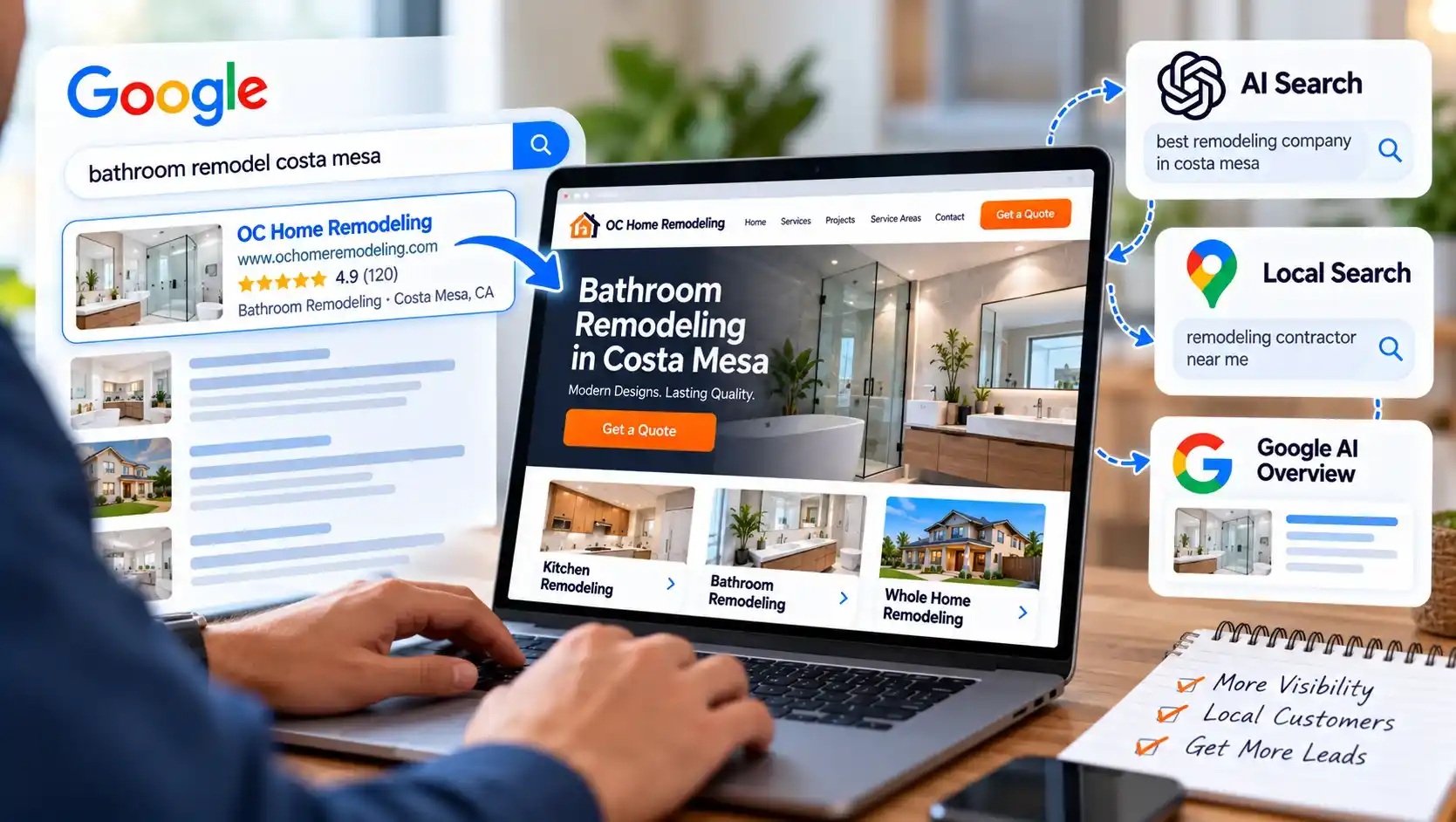
A website gives search engines and AI tools something to read. Take a remodeling company: separate pages for kitchen, bathroom, and whole-home remodels, plus the cities it serves, tell Google exactly what it does and where. Without those pages, you rely on a directory listing or word of mouth alone.
No one can promise a ranking. But without a website, you have no real chance of showing up for the searches that matter to you. If you want to see how a site built for a trade looks in practice, our remodeling web design page shows what these pages cover.
2. It builds trust before anyone talks to you
A website answers the quiet question every new customer has: is this business real?
A remodeling project can cost tens of thousands of dollars and last weeks inside someone’s home. Homeowners want proof before they let a stranger in. Clear contact details, photos of completed jobs, named team members, and customer reviews all help.
Trust is also about quality. An outdated site with broken links or a slow mobile page can hurt more than it helps. A simple, current site beats a fancy, neglected one.
3. It is open 24 hours a day
Your office closes at 5 p.m. Your website does not.
A homeowner can scroll your project gallery at 10 p.m., read how your process works, and fill in a quote form. You reply in the morning. For a roofer, the same idea means photos of past jobs and a “request an estimate” button. See how this works for roofing web design.
4. It brings in customers from local search
If you serve a specific area, local search is one of your best opportunities. Think of searches like “remodeling contractor Anaheim” or “HVAC repair near me.”
A website lets you build pages for the cities you serve, show your address and service area, and connect to your Google Business Profile. A profile alone is useful, but a website gives it more to point to and holds details a listing cannot. For a deeper look, see our guide to local SEO for Orange County businesses.
5. You own it
Social media is rented space. An account can be hacked, limited, or shut down, and an algorithm change can cut your reach overnight.
Your website and domain name belong to you. A remodeler who spent years posting before and after photos on one platform has little to show if the account disappears. The same photos in a project gallery on your own site stay put. Use social media to reach people, then send them to your website, where you control the experience.
6. It makes your marketing work harder
Everything else you do online needs somewhere to send people. Ads, email newsletters, social posts, yard signs with a QR code, and Google Business Profile all lead to one place: your website.
Without one, you pay for attention and then have nowhere to turn it into a call or a booking. With one, you can send people to a page built for that exact offer, such as a landing page for kitchen remodeling quotes.
7. It can bring in leads and sales
A website can do the first part of your sales work while you are busy. Contact forms, click-to-call buttons, booking tools, and online checkout turn interest into action.
You do not need an online store for this to matter. A remodeler can collect project type, budget range, and photos through a quote form. A boutique can sell its best products online and keep the storefront. Different trades need different setups, and our page on contractor web design shows how.
8. It shows you what customers want
A website gives you information a printed ad never will. With free tools like Google Analytics and Google Search Console, you can see which pages people visit, which searches lead them to you, and where they leave.
That helps you make plain decisions. If many visitors read your kitchen remodeling page and few send a quote request, the page may need better photos or a clearer form. If bathroom pages get steady visits, they may deserve more attention. To check how much traffic your site gets, you can use a free website traffic checker.
9. It saves you time answering the same questions
Most businesses get the same ten questions again and again. Remodelers hear: How long will it take? Do you handle permits? Can we stay in the house? What does the process look like? Do you offer financing?
Put those answers on your site and you spend less time on the phone and in your inbox. Customers who arrive informed ask better questions and are closer to ready to hire.
10. It keeps you on level ground with competitors
If a customer compares two nearby businesses and only one has a website with real information, the other starts behind. Not because it is worse, but because the customer has less to go on.
A good site also lets a small local business compete for attention with larger companies. You may not match their ad budget, but you can match their clarity, speed of response, and local knowledge.
Examples: how different businesses use a website
The reasons above apply everywhere, but the content changes by industry.
| Industry | What the website does | Related page |
|---|---|---|
| Remodeling | Shows project galleries, process, license, and a quote form | Remodeling Web Design |
| Contractor | Lists services, service areas, and past jobs | Contractor Web Design |
| Roofing | Shows storm repair and replacement work, with fast contact options | Roofing Web Design |
| HVAC | Handles emergency calls, maintenance plans, and service areas | HVAC Web Design |
What if I only use social media?
Social media is a good way to share updates and talk to customers. It is not a replacement for a website, for three reasons:
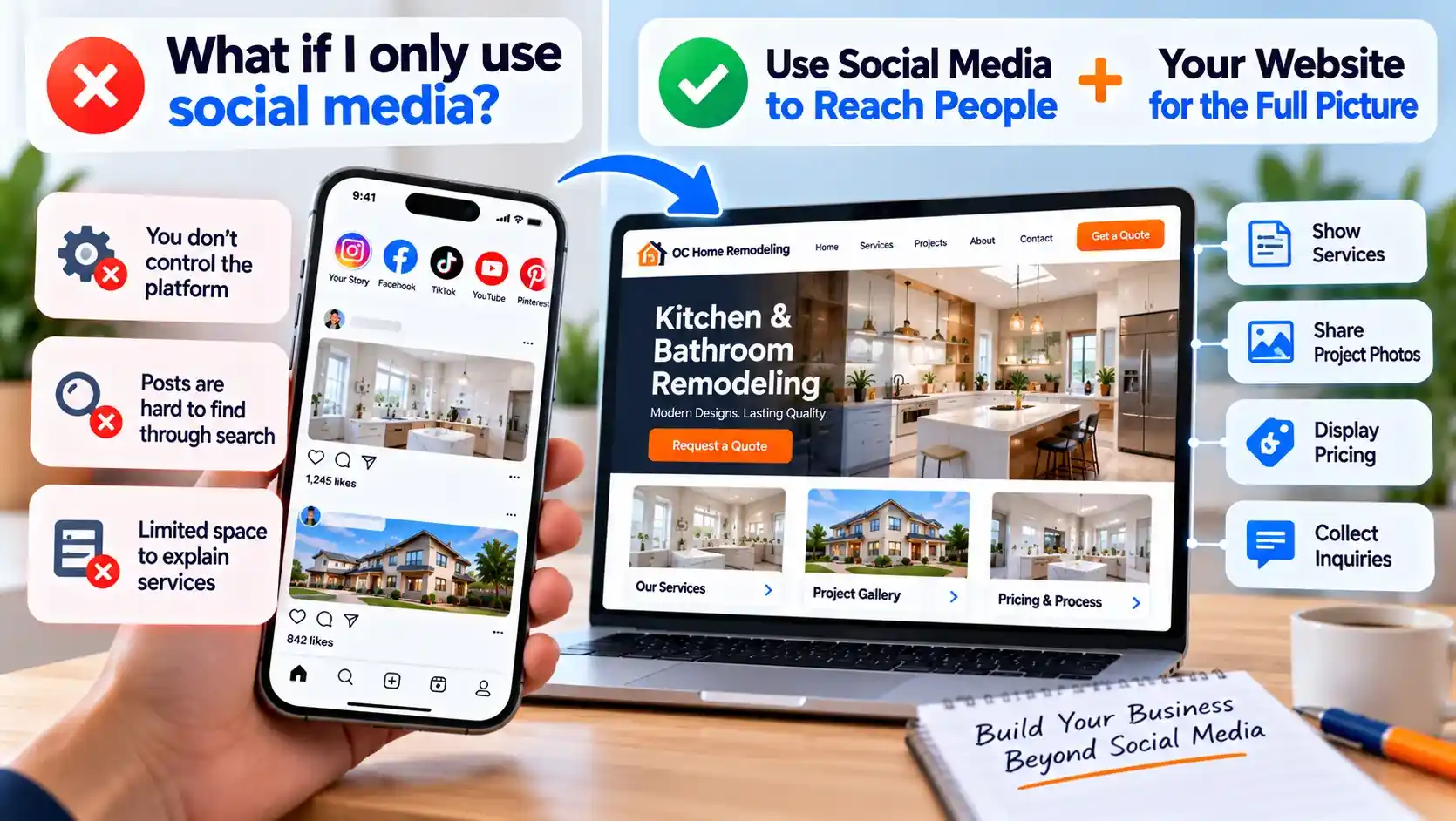
- You do not control the platform, its rules, or who sees your posts.
- Posts are hard to find through search, and old ones disappear from view.
- You have limited space to explain services, show pricing, or collect inquiries.
The practical setup is simple: use social media to reach people and your website to give them the full picture.
Common objections, answered honestly
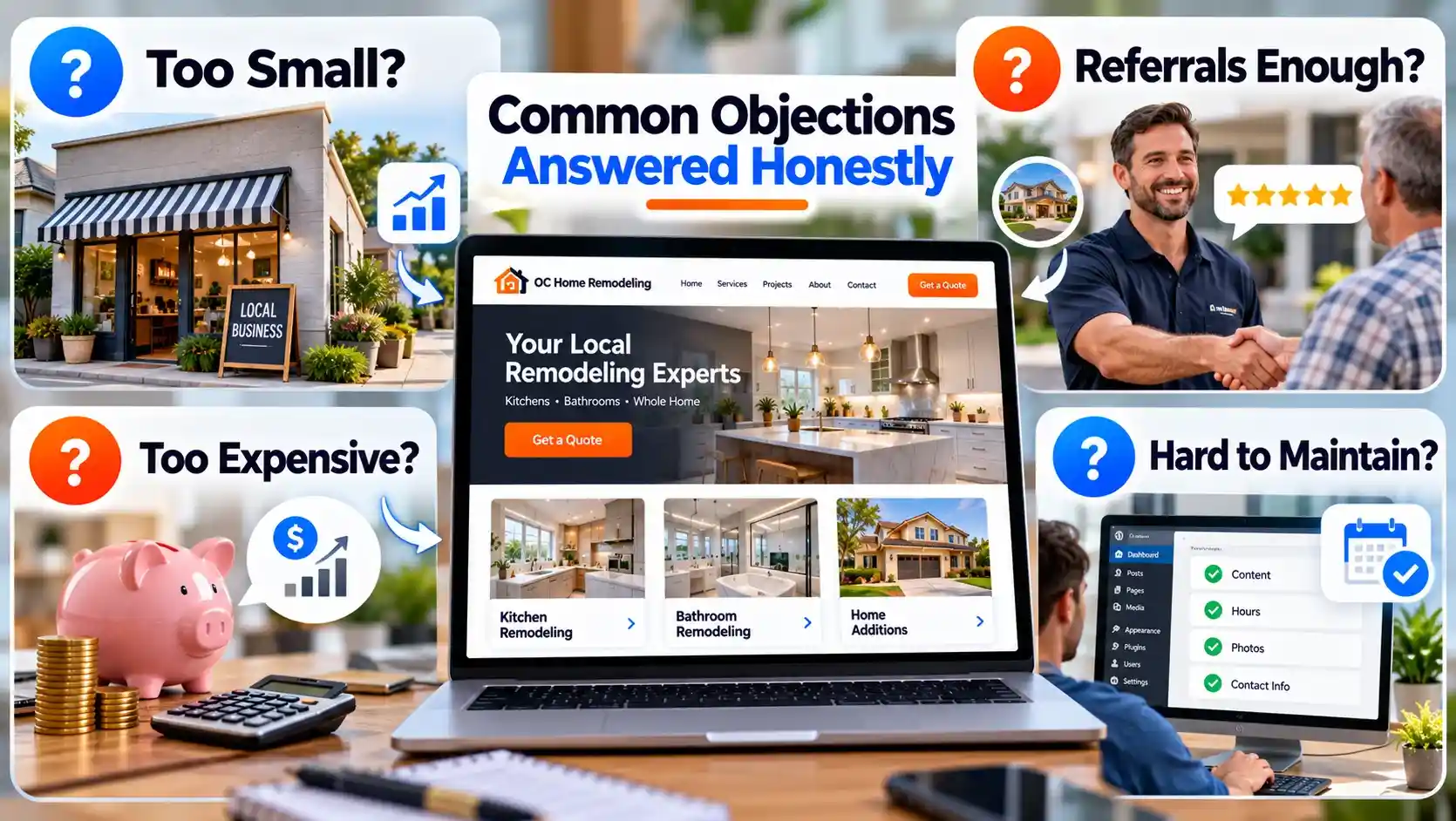
“My business is too small.” Small businesses often benefit the most, because customers have fewer other ways to check them out. A five-page site can be enough.
“I get enough work from referrals.” Referred customers still look you up. They search your name before they call. What they find affects whether they do.
“A website is too expensive.” Costs range widely. A do-it-yourself builder can run at a low monthly fee. A custom site from a professional costs more because you pay for planning, design, writing, and technical setup. The right choice depends on your budget, your time, and what the site must do. A basic, honest site is better than none.
“I will never keep it updated.” This is a fair worry. Keep the site small enough to maintain, and set a reminder to check hours, prices, and contact details every few months. Our guide on how to manage a small business website covers a simple routine.
What a website cannot do on its own
A website is not a switch that brings in customers the day it goes live. It does not replace good service, it needs time to be found through search, and it needs fresh content and some upkeep. Think of it as the base that your reviews, local SEO, and advertising all build on.
What should a small business website include?
At minimum:
- A clear homepage that says what you do, where, and for whom
- Separate pages for each main service
- Your phone number, address (if customers visit you), and a contact form
- Reviews or testimonials from real customers
- Photos of your work, team, or location
- An About page
- A layout that works well on a phone
- Fast loading pages
- HTTPS (the padlock in the browser), which protects visitors’ information
- A privacy policy, especially if you collect names and emails through forms
- A business email address on your own domain, such as name@yourcompany.com
- Basic SEO setup: page titles, descriptions, and a Google Business Profile that matches your site
Accessibility matters too. Features like readable text, good color contrast, and image descriptions help more people use your site. Ask your designer how they handle it.
You can add a blog, online booking, or a store later. For design direction, see our article on modern website design trends.
How do I get started?
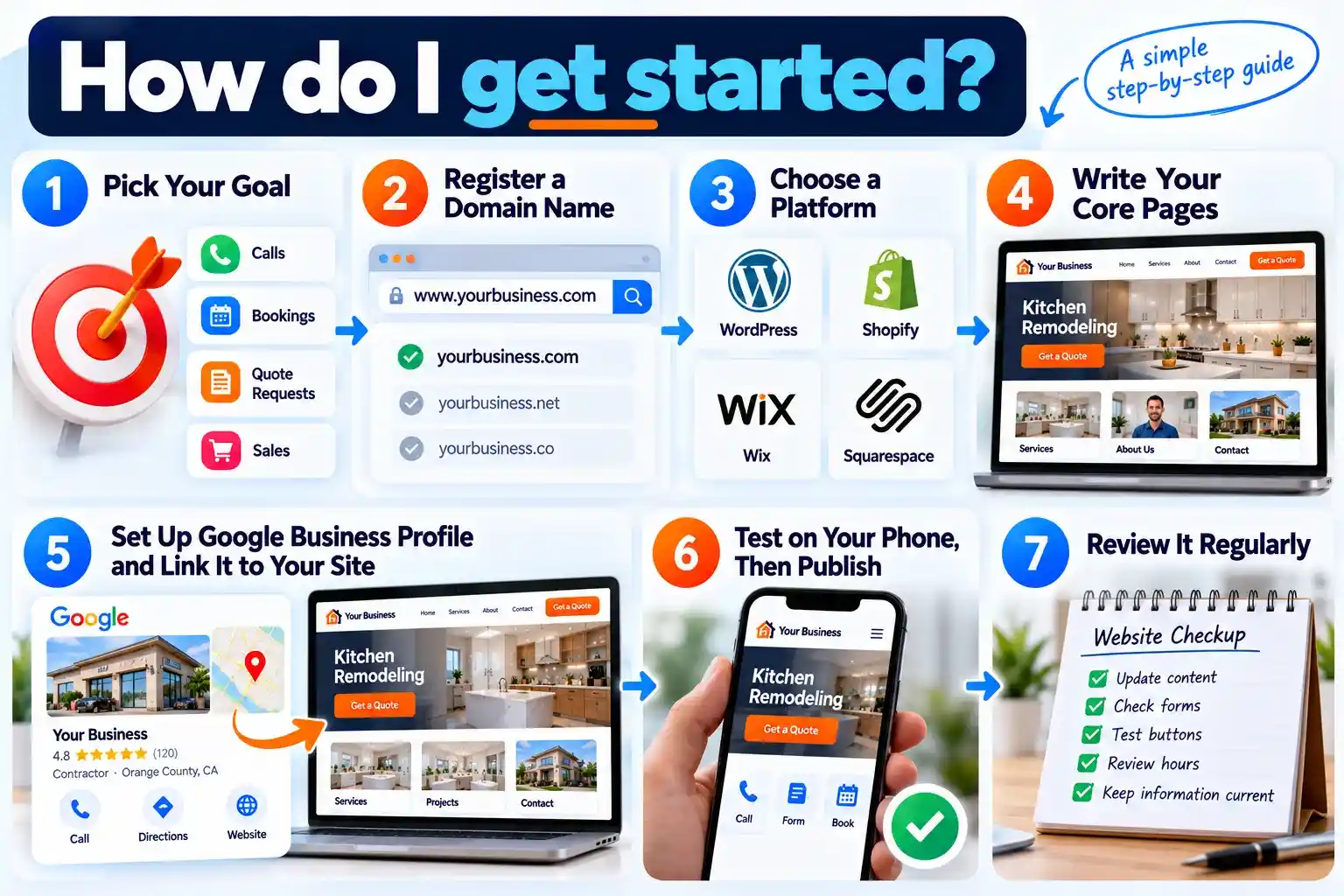
- Pick your goal. Calls, bookings, quote requests, or sales. One main goal keeps the site focused.
- Register a domain name. Short, easy to spell, and close to your business name.
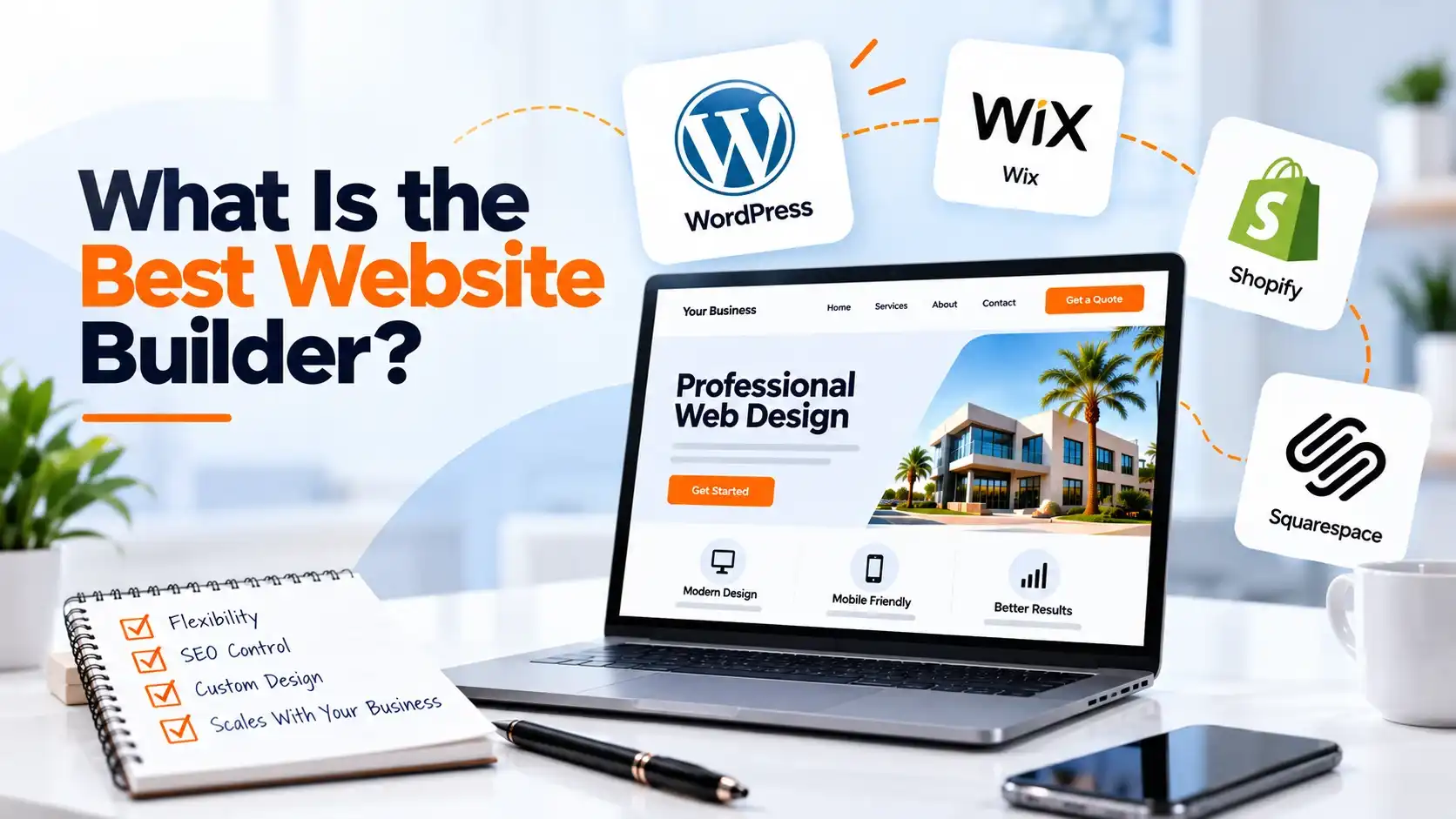
- Choose a platform. WordPress, Shopify, Wix, and Squarespace are common options. The right one depends on your needs and how much help you want. Our WordPress website design Orange County page explains one popular route.
- Write your core pages. Describe your services in plain language, the way you would explain them to a customer.
- Set up Google Business Profile and link it to your site. Keep your name, address, and phone number identical in both places.
- Test on your phone, then publish. Check every form and button yourself.
- Review it regularly. Fix what is out of date.
If you would rather hand this off, a local web design and SEO team can plan the site structure, write the pages, and set up search basics from the start.
If you run a business in Orange County and want help planning a website built with search in mind from day one, contact our team to talk through what your business needs.
Frequently Asked Questions
Almost every business benefits from one. If customers ever search for you, compare you with others, or want details before they buy, a website helps. Even a business that gets most of its work from referrals gains from having one.
Yes. A Facebook page is useful, but you do not own it and have little control over who sees it. A website gives you a stable home for your information that works alongside social media.
Yes. Homeowners compare remodelers by looking at project photos, reviews, and process. A website puts all of that in one place and gives you a way to collect quote requests.
It depends on the platform, the number of pages, and whether you build it yourself or hire someone. A do-it-yourself site is cheaper but costs more of your time. A custom site costs more upfront and usually comes with stronger planning and SEO setup. Ask for a clear quote that covers design, hosting, and ongoing support.
A simple site can be ready in a few weeks. Larger sites with many pages, custom design, or online stores take longer. Most delays come from waiting on text and photos, so gather those early.
A website works best when people can find it. That usually takes some mix of local SEO, a Google Business Profile, reviews, and sometimes ads. No one can guarantee results, but a solid website is the base all of those depend on.
If you want customers to find you through search, yes. SEO covers clear page titles, useful content, fast loading, mobile-friendly design, and local signals like your business address and service area.
Final thoughts
The reasons why every business needs a website come down to a few plain points: people look you up before they buy, a website is open when you are not, and it is the one online space you own. You do not need a big or expensive site to start. You need a clear, honest one that answers customer questions and makes it easy to contact you.